Posts for: #2023

Fedora 40 Enhances Security with Systemd Hardening Measures

Fedora 40 Enhances Security with Systemd Hardening Measures

Fedora 40 is set to enhance system security by utilizing high-level security features offered by systemd, as reported by Phoronix. The upcoming release of Fedora plans to enable several optional settings provided by systemd to strengthen the security of services running on the system. These settings include PrivateTmp, ProtectSystem, ProtectHome, ProtectClock, ProtectHostname, ProtectKernelModules, PrivateDevices, PrivateNetwork, NoNewPrivileges, ProtectKernelTunables, and other options that provide additional restrictions and isolation for systemd services.

The change proposal for this systemd security hardening has been approved by the Fedora Engineering and Steering Committee (FESCo) and is expected to be implemented in Fedora 40, due to debut in the spring. The inclusion of these security measures will significantly enhance the default security of Fedora services, protecting against any potential unknown security vulnerabilities in default system services.

For more information on the systemd security hardening changes planned for Fedora 40, you can refer to the change proposal and the approval by FESCo.

Source: Phoronix.

Lite3DP Gen 2: A Compact, Open-Source Resin 3D Printer

Lite3DP Gen 2: A Compact, Open-Source Resin 3D Printer

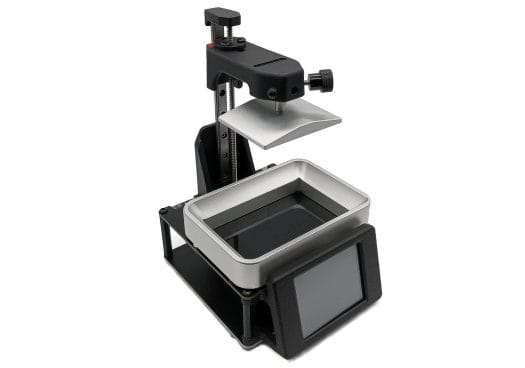
The Lite3DP Gen 2 3D Printer has recently been announced. With a host of new features and improvements, this open-source resin printer aims to provide an affordable and customizable option for enthusiasts and makers.

Key Features & Specifications

  • Electronics: All-in-one PCB with ESP32 microcontroller, high-res LCD, ultra-silent TMC2209 driver, and other components
  • Firmware: Arduino
  • Technology: MSLA, LCD-SLA
  • Resolution: XY: 0.115 mm; Z: 0.025, 0.05, and 0.1 mm
  • Build Volume: 36.7 x 48.8 x 80 mm
  • Tray Volume: 50 cm³ for liquid resin
  • Compatible Resins: All UV 405 nm resins (standard, industrial, flexible, castable, dental, etc)
  • Print Speed: Up to 40 mm/h
  • Data Input: Micro SD card for autonomous operation
  • Misc: Buttons, capacitive touch buttons, passive heat dissipation, touchscreen
  • Power Supply: 12 V, 5.5×2.1 mm, ≥1 A
  • Power Consumption: Less than 10 W
  • Dimensions: 100 x 100 x 167 mm
  • Weight: 470 grams

Improvements Over the Previous Model

The Lite3DP Gen 2 features several enhancements, including a redesigned body, the replacement of the Arduino Pro Mini with an ESP32 microcontroller, and backward compatibility with the Lite 3DP S1 model. Owners of existing Lite3DP printers can utilize a Gen 2 dev kit to upgrade their machines.

Complete Open-Source Solution

A standout feature of the Gen 2 3D Printer is its complete open-source nature. Both the firmware and hardware, along with the software, are open for modification. The GitHub repository hosts schematics, Gerber files, code, and other essential resources, allowing users to build their versions of an mSLA resin printer.

Affordable and Customizable

While the Lite3DP Gen 2 might not boast the most impressive specifications and feature list compared to commercial alternatives, its open-source architecture makes it easier to repair, maintain, and customize. Priced at $229 for the pre-assembled product and $115 for the dev kit (excluding shipping fees of $8 to the United States and $18 to the rest of the world), it offers a cost-effective solution for those looking to explore resin 3D printing.

Crowd Supply Launch

Lite3DP Gen 2 was launched on Crowd Supply last November, and the funding campaign is set to conclude on December 21.

Source: CNX Software – Embedded Systems News.

TrueNAS 13.0-U6.1 Release: Concluding the TrueNAS 13.0 Series

TrueNAS 13.0-U6.1 Release: Concluding the TrueNAS 13.0 Series

TrueNAS, the open-source storage platform developed by iXsystems, has announced the release of TrueNAS 13.0-U6.1. This update is expected to be the final version of TrueNAS 13.0, following a series that has been recognized for its stability and quality.

Incremental Improvements and Bug Fixes

TrueNAS 13.0-U6.1 includes updates to OpenZFS, addressing approximately 20 bug fixes and security improvements. Notably, this release incorporates OpenZFS 2.1.14 to correct a rarely-occurring upstream ZFS bug. The incremental improvements aim to enhance the overall performance and reliability of the platform.

Transition to TrueNAS 13.1

With TrueNAS 13.0-U6.1 serving as the concluding chapter of the 13.0 series, the development focus will shift to TrueNAS 13.1, scheduled for release in early 2024. The upcoming version is expected to maintain storage-focused features with updates to FreeBSD, OpenZFS, Samba, and other key components.

Recommendations for Users

TrueNAS recommends that existing users of TrueNAS 12.0 and TrueNAS 11.3 update their systems to TrueNAS 13.0-U6.1. This step is advised not only for resolving any software or performance issues but also to prepare for future updates, including the transition to TrueNAS 13.1 in 2024.

Current TrueNAS 13.0 users can update to U6.1 directly from the TrueNAS web UI by navigating to the System -> Update page. New users can get started by downloading the TrueNAS CORE installation media from the official website.

Looking Ahead

As TrueNAS continues to evolve, the focus remains on providing a reliable and efficient storage solution. TrueNAS Enterprise users will have the option to sidegrade to TrueNAS SCALE Enterprise 23.10 and other SCALE-based releases, catering to specific functionality requirements.

For detailed recommendations and updates, users are encouraged to refer to the TrueNAS Software Status page, which provides the latest information on stability and security releases.

Topton FU02 Fanless Mini PC With Ryzen 7 7730U Processor

Topton FU02 Fanless Mini PC With Ryzen 7 7730U Processor

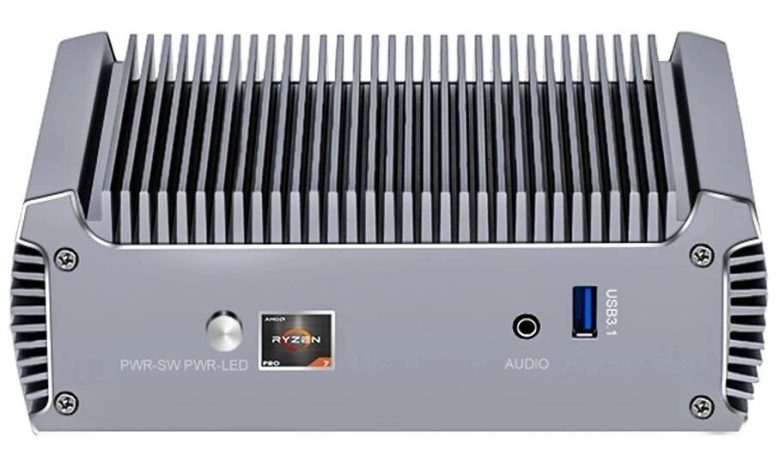
Topton has unveiled an updated version of its small fanless computer, the Topton FU02, featuring an aluminum body with heat-spreading fins on the top and sides. Initially supporting up to an AMD Ryzen 7 4700U processor, the latest release introduces newer processor options, including Ryzen 5000U and Ryzen 7000U processors.

Key Features

  • The highest performance version now includes the AMD Ryzen 7 7730U chip.
  • While the Ryzen 7 7730U shares similarities with the Ryzen 7 5825U, it is a technically newer chip, potentially offering longer support and achieving slightly higher scores in certain synthetic benchmarks.

In addition, the Topton FU02 is available as a barebones model, starting at a base price without memory, storage, or a wireless card. Customers have the option to purchase a fully equipped model, featuring up to 64GB of dual-channel memory, up to 2TB of storage, and a WiFi 6 & Bluetooth 5.2 wireless card. The computer is designed with two SODIMM slots for DDR4-3200 memory, an M.2 2280 slot for PCIe 3.0 x4 NVMe storage, and a 2.5-inch bay for a hard drive or SSD.

Ports

The Topton FU02 features a variety of ports, including:

  • 2 x Gigabit Ethernet
  • 2 x HDMI 2.0
  • 3 x USB 3.1 Type-C
  • 2 x USB 2.0 Type-A
  • 1 x 3.5mm audio

Topton highlights that the computer not only operates silently due to its fanless design but also features an aluminum enclosure that is dust and moisture-proof or at least resistant.

Source: Liliputing.

Flux Version 2.2.0 Released

Flux Version 2.2.0 Released

Flux CD has released version 2.2.0, a tool for keeping Kubernetes clusters in sync with sources of configuration and automating updates to configuration when there is new code to deploy. This feature release brings several updates and improvements to provide users with the best experience.

The Flux CLI and controllers have been updated to support Kustomize v5.3.0 and Kubernetes v1.28.4. This ensures compatibility with the latest versions and improves performance and stability.

One of the major updates in this release is the significant overhaul of the Flux helm-controller’s reconciliation model. This addresses persistent issues such as the automatic recovery of releases stuck in a pending state. It also improves the observability of the release status and introduces the ability to enable drift detection on a per-object basis. More details on the helm-controller improvements can be found in the Announcing Flux 2.2 GA blog post.

The Flux CLI now allows users to force or reset the reconciliation state of a HelmRelease v2beta2 object using the flux reconcile hr --force and flux reconcile hr --reset commands. This gives users more control over the deployment process.

The Flux CLI also comes with support for bootstrapping Gitea repositories, providing users with more options for managing their configuration sources. It also adds guardrails to flux install and flux bootstrap to protect users from destructive operations. Additionally, the flux version and flux check commands now print the Flux distribution version deployed on the cluster, making it easier for users to keep track of their Flux installation.

The alerting capabilities of Flux have been extended with support for NATS and Bitbucket Server & Data Center. This allows users to use these additional notification providers for alerting and monitoring purposes.

Starting with this release, Flux minor versions are benchmarked to measure the Mean Time To Production (MTTP), providing users with valuable insights into the performance of Flux.

The release is compatible with Kubernetes versions 1.26, 1.27, and 1.28.

The API changes in this release include the promotion of the HelmRelease kind from v2beta1 to v2beta2. The v2beta2 API is backwards compatible with v2beta1, and the v2beta1 API is deprecated and will be removed in a future release. Several new fields have been added, including drift detection and correction on a per-release basis, selective running of Helm tests, and a history of metadata from Helm releases. The Alert and Provider kinds have also been promoted from v1beta2 to v1beta3, with the removal of the .status field. The Bucket API now has a new field for server-side filtering of files, and the OCIRepository and HelmChart APIs have new fields for verifying OIDC identity. The HelmRepository and ImageRepository APIs have a new boolean field for connecting to non-TLS HTTP container registries.

To upgrade to Flux v2.2.0, users can either rerun the bootstrap process or use the Flux GitHub Action. The APIs can be upgraded by deploying the new CRDs and controllers and changing the manifests in Git. It is advised not to delay this procedure as the deprecated versions will be removed after 6 months.

The release also includes new documentation for the HelmRelease v2beta2 specification and a guide on enabling in-memory Kustomize builds.

Overall, Flux v2.2.0 brings several updates and improvements to provide users with a better experience in managing their Kubernetes clusters and configuration sources. Users are encouraged to upgrade to this version for the best experience.

New and Improved Installer for XCP-ng 8.2.1

The XCP-ng team has rolled out an updated installer for version 8.2.1, bringing various improvements.

The release includes all security and maintenance updates since the initial launch, enhanced hardware support, and drivers. Notable fixes involve AMD hardware boot failures, display issues on Intel NUC 10 and above, and compatibility with newer CPUs. The installer now supports network chipsets for home labs, includes additional optional drivers, and ensures a smoother installation process.

Users can download the latest ISOs from the official website.