Posts for: #2024

After a 16-year hiatus, Damn Small Linux makes a triumphant return

Damn Small Linux (DSL) is making a comeback after 16 years with the release of DSL 2024. This lightweight distribution, based on antiX 23, offers a unique experience in the world of Debian-based and Fedora-based distros.

DSL used to be a compact distro, only 50 MB in size, but it has now been updated to better suit the current state of computing. Despite the changes, it remains a great option for older computers with modest specifications. Currently in alpha, DSL 2024 features version 5.10 of the Linux kernel and Debian 12 ‘Bookworm’ at its core. It comes with two window managers, Fluxbox and JWM, and apt is fully enabled by default for easy package installations. Due to the updates and improvements, the ISO size of DSL has increased to around 700 MB. The goal of the developers is to provide a usable desktop experience that can fit on a single CD with a maximum limit of 700 MB. This is to ensure that older computers can continue to be used for as long as possible.

The application suite in DSL 2024 is extensive and includes zzzFM as the file manager, mtPaint for graphics editing, BadWolf as the default web browser, and tmux as the terminal multiplexer.

Source: It’s FOSS News.

K3s Releases Latest Version: v1.29.1+k3s2

K3s Releases Latest Version: v1.29.1+k3s2

K3s, the lightweight, highly available, certified Kubernetes distribution, has released version v1.29.1+k3s2. This release is designed for production workloads in unattended, resource-constrained, remote locations, or inside IoT appliances. K3s is packaged as a single <70MB binary, reducing the dependencies and steps needed to install, run, and auto-update a production Kubernetes cluster.

The update to Kubernetes v1.29.1 brings several fixes and improvements. Some of the changes since v1.29.0+k3s1 include:

  • Bump Sonobuoy version
  • Bump actions/setup-go from 4 to 5
  • Update stable channel to v1.28.5+k3s1 and add v1.29 channel
  • Added support for env *_PROXY variables for agent loadbalancer
  • Add a retry around updating a secrets-encrypt node annotations
  • Silence SELinux warning on INSTALL_K3S_SKIP_SELINUX_RPM
  • Add ServiceLB support for PodHostIPs FeatureGate
  • Redirect error stream to null when checking nm-cloud systemd unit
  • Dockerfile.dapper: set $HOME properly
  • Add system-agent-installer-k3s step to GA release instructions
  • Fix install script checksum
  • and many more…

For a full list of changes, you can check the Kubernetes release notes.

This release also includes updates to various embedded components, such as Kubernetes v1.29.1, Kine v0.11.0, SQLite 3.42.0, etcd v3.5.9-k3s1, containerd v1.7.11-k3s2, runc v1.1.12-k3s1, Flannel v0.24.0, metrics-server v0.6.3, Traefik v2.10.5, CoreDNS v1.10.1, helm-controller v0.15.8, and local-path-provisioner v0.0.24.

TerraMaster D5 Hybrid Storage Enclosure: Supports 2 Hard Drives and 3 SSDs

TerraMaster D5 Hybrid Storage Enclosure: Supports 2 Hard Drives and 3 SSDs

The TerraMaster D5 Hybrid is a USB enclosure that supports up to two hard drives and three NVMe SSDs, providing a combined total of up to 68TB of storage.

The D5 Hybrid has space for two 3.5 or 2.5-inch hard drives with storage capacities of up to 22TB each, as well as three M.2 2280 slots for NVMe SSDs of up to 8TB each. This allows users to take advantage of the higher data transfer speeds of SSDs for “hot” storage that requires frequent access, while using the hard drives for archival or “cold” storage of less frequently used data.

It’s important to note that the data transfer speeds are limited by the USB 3.2 Gen 2 (10 Gbps) connections supported by the enclosure, which means that the maximum transfer speed will be 980MB/s regardless of the SSDs used.

The enclosure supports RAID 0 for maximum storage capacity, but it does not offer any redundancy. It also supports RAID 1 mirroring for redundant data, JBOD, or single disk modes.

The D5 Hybrid measures 222 x 154 x 119mm and contains acoustic materials to reduce noise. The package includes a 40W power supply, and the company states that a fully loaded enclosure with hard drives and SSDs will consume up to 30 watts under heavy load or 10 watts while idle.

The TerraMaster D5 Hybrid is currently available for purchase for $220 from TerraMaster

Source: Liliputing.

Incus 0.5.1 Release: Bug Fixes and Compatibility Updates for CentOS, AlmaLinux and Rocky Linux VMs

Incus 0.5.1 Release: Bug Fixes and Compatibility Updates for CentOS, AlmaLinux and Rocky Linux VMs

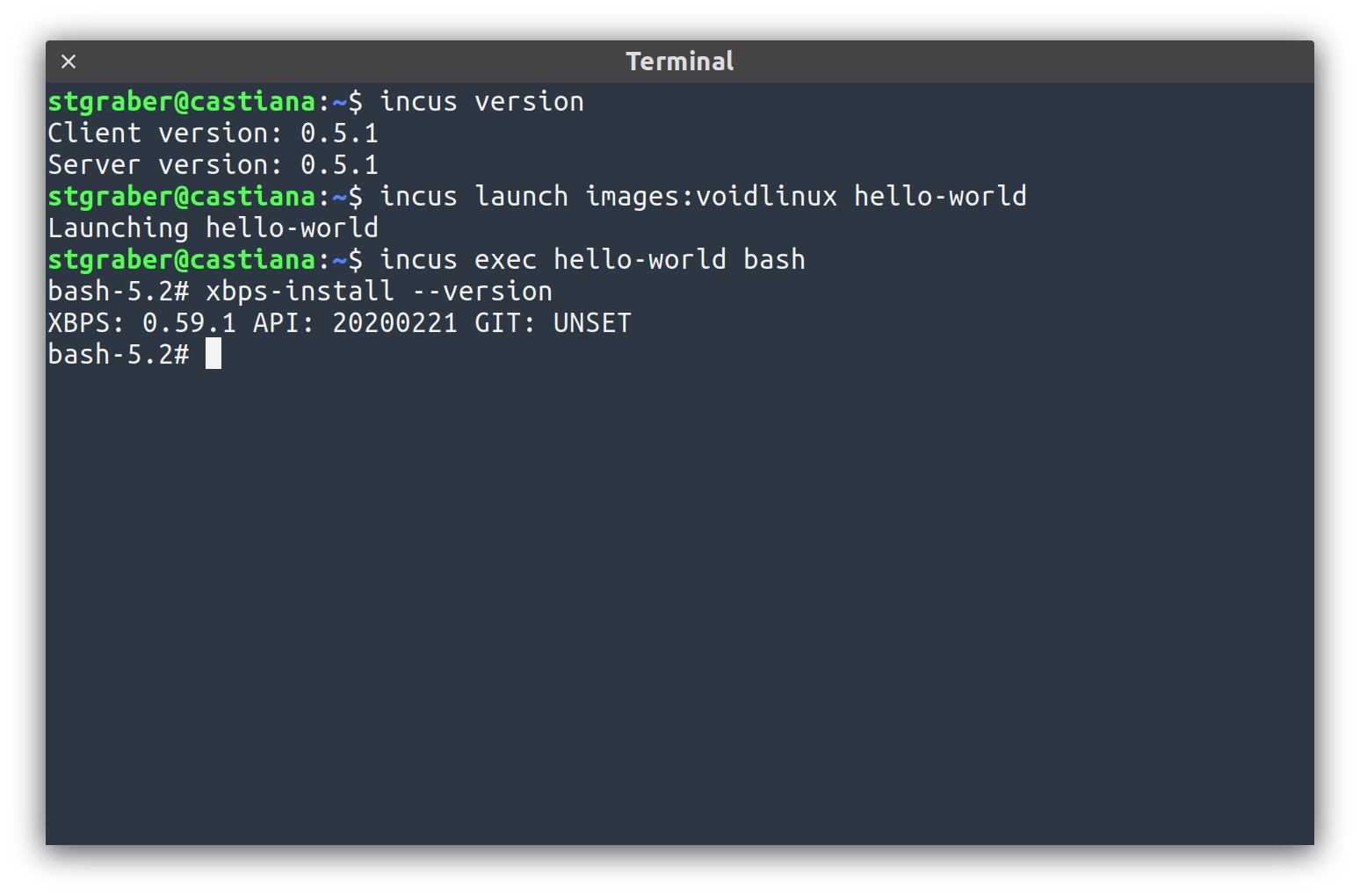
Incus 0.5.1 has been released. This release includes important bugfixes and a minor feature addition that caters to those running CentOS, AlmaLinux and Rocky Linux virtual machines.

One of the highlights of this release is the alternative way to get the VM agent. In the previous version, there was a single share named config that included both the instance-specific agent configuration and the incus-agent binary. However, this approach was wasteful and required a copy of the large incus-agent for every VM. With Incus 0.5.1, a separate share was introduced just for the binaries to avoid copying them for every VM. This change reduces resource usage on the host system.

Another important fix in this release is the handling of stopped instances during evacuation. In Incus 0.5, a bug caused stopped instances to be relocated to other systems during evacuation, even if they were configured to remain where they were. This bug has been corrected in Incus 0.5.1, ensuring that instances using stopped, force-stop, or stateful-stop will remain on their current server.

There are also some database performance fixes in this release. Improvements in Incus 0.5 unintentionally caused nested database transactions when fetching network information details for a large number of instances. This issue became visible when using an Incus cluster that serves DNS zones and has its metrics scraped by Prometheus. The fix removes the nested transactions and optimizes database interactions during command API interactions.

Here is the complete changelog for Incus 0.5.1:

  • Translated using Weblate (German)
  • Translated using Weblate (Dutch)
  • incus/action: Fix resume
  • Translated using Weblate (Japanese)
  • Translated using Weblate (Japanese)
  • Translated using Weblate (Japanese)
  • doc: Remove net_prio
  • incusd/cgroup: Fully remove net_prio
  • incusd/warningtype: Remove net_prio
  • incusd/cgroup: Look for full cgroup controllers list at the root
  • incusd/dns: Serialize DNS queries
  • incusd/network: Optimize UsedByInstanceDevices
  • incusd/backups: Simplify missing backup errors
  • tests: Update for current backup errors
  • incusd/cluster: Optimize ConnectIfInstanceIsRemote
  • incusd/instance/qemu/agent-loader: Fix to work with busybox
  • doc/installing.md: add a gentoo-wiki link under Gentoo section
  • Translated using Weblate (French)
  • Translated using Weblate (Dutch)
  • incusd/device/disk: Better cleanup cloud-init ISO
  • incusd/instance/qemu/qmp: Add Eject command
  • incusd/instance/qemu/qmp: Handle eject requests
  • api: agent_config_drive
  • doc/devices/disk: Add agent:config drive
  • incusd/device/disk: Add agent config drive
  • incusd/project: Add support for agent config drive
  • incusd/instance/qemu/agent-loader: Handle agent drive
  • incusd/db/warningtype: gofmt
  • incusd/loki: Sort lifecycle context keys
  • incusd/instance/qemu/agent-loader: Don’t hardcode paths
  • incusd/cluster: Fix evacuation of stopped instances

For more information, you can refer to the Incus documentation.

Ubuntu 24.04 LTS Aims to Include Linux 6.8 Kernel

Canonical has laid out their kernel plans for Ubuntu 24.04 LTS and they are being hopeful with tentative plans to ship the in-development Linux 6.8 kernel as their default kernel on this next long-term support Ubuntu desktop/server distribution. Linux 6.8 has a lot of great features and improvements in store from hardware support to new optimizations and more. Andrea Righi of Canonical announced the tentative plans for Linux 6.8 in Ubuntu 24.04. An experimental kernel build is already available via a PPA.

Source: Phoronix.

XCP-ng Releases Security Update for January 2024

XCP-ng Releases Security Update for January 2024

XCP-ng has released their January 2024 security update for their virtualization platform. The update is specifically for the 8.2 LTS release, which is currently the only supported release of XCP-ng.

The update addresses a security issue in the Linux kernel of XCP-ng’s control domain. This issue allowed a guest with limited privileges to send special network packets that could crash the network system in XCP-ng. While the crash only occurred in specific situations, several users reported the issue and it was discovered that others in the community were experiencing similar problems. This led to collaboration within the community to investigate and resolve the issue.

The vulnerability that was fixed is known as XSA-448 and is identified as CVE-2023-46838. This vulnerability allowed an unprivileged guest to launch a Denial of Service (DoS) attack on the host system by sending certain network packets to the backend, causing it to crash. This vulnerability was particularly observed when using pfSense with WireGuard, resulting in random crashes of the host system.