Posts for: #hardware

Youyeetoo R1: RK3588S SBC with NFC and M.2 Sockets at an Affordable Price

Youyeetoo R1: RK3588S SBC with NFC and M.2 Sockets at an Affordable Price

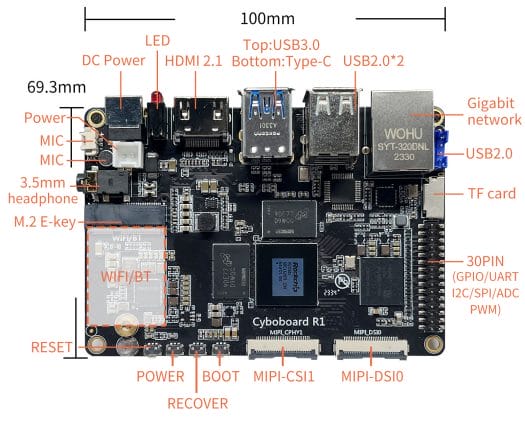
Youyeetoo has released the Youyeetoo R1, a feature-rich single-board computer (SBC) powered by the Rockchip RK3588S. The compact 100×69.3mm board offers two M.2 sockets for NVME/SSD or 4G LTE, a WiFi and Bluetooth connector, NFC support, four display interfaces, and two MIPI CSI camera interfaces.

The Youyeetoo R1 comes with various configuration options, including up to 32GB of RAM and 256GB of eMMC flash. The board also features a gigabit Ethernet port, five USB interfaces, a built-in microphone, multiple audio inputs/outputs, a 30-pin header for expansion, and HDMI input via an adapter connected to one of the MIPI CSI ports.

Specifications:

  • SoC: Rockchip RK3588S with octa-core processor (4x Cortex-A76 cores @ up to 2.2-2.4 GHz, 4x Cortex-A55 cores @ up to 1.8 GHz), Arm Mali-G610 GPU, 8Kp60 video decoder, and 6 TOPS NPU for AI acceleration
  • System Memory: 4GB, 8GB, 16GB, or 32GB LPDDR4x
  • Storage: 32GB, 64GB, 128GB, or 256GB eMMC flash, M.2 M-Key socket for NVMe or SATA SSD, MicroSD card socket
  • Video Output: HDMI 2.1 port up to 8Kp60 or 4Kp120, 2x MIPI DSI connectors up to 4Kp60, USB Type-C with DP1.4 support up to 8Kp30
  • Video Input: 2x 4-lane MIPI CSI connectors, optional HDMI input via RK628D adapter board
  • Audio: 3.5mm earphone jack with microphone, digital audio output via HDMI, on-board microphone, 4-pin header with R/L/GND/MIC, 2-pin header for microphone
  • Networking and connectivity: Gigabit Ethernet RJ45, M.2 E-Key socket for WiFi 5 and Bluetooth 5.0 module or WiFi 6 and Bluetooth 5.2 module, M.2 M-Key socket for 4G LTE module, NFC via external antenna
  • USB: 1x USB 3.0 Type-A port, 2x USB 2.0 Type-A ports, 1x USB 3.1 OTG Type-C port with DisplayPort Alt mode, 4-pin header with USB 2.0 interface
  • Expansion: M.2 2242 M-Key socket for PCIe/SATA SSD or 4G LTE module, M.2 2230 E-Key socket for WiFi & Bluetooth module, 30-pin GPIO header with various I2C, UART, CAN, PWM, ADC, SPI, and GPIO signals
  • Debugging: Debug UART connector
  • Misc: Power, Recovery, Reset, and Boot buttons, 2x red/green user LEDs, RTC battery connector, fan connector
  • Power Supply: 12V/3A via 5.5×2.1mm DC jack or 2-pin socket
  • Dimensions: 100 x 69.3 mm

The SBC supports Android 13, Debian 11, Ubuntu 22.04, and Buildroot, all based on Linux 5.10. The documentation for the board is still being developed, but previous reviews of Youyeetoo products have shown decent documentation quality.

The Youyeetoo R1 will be available at $99. Higher configuration options such as 8GB/64GB are available. 16GB/128GB and 32GB/256GB models expected to be released in the future.

Source: CNX Software – Embedded Systems News.
Lite3DP Gen 2: A Compact, Open-Source Resin 3D Printer

Lite3DP Gen 2: A Compact, Open-Source Resin 3D Printer

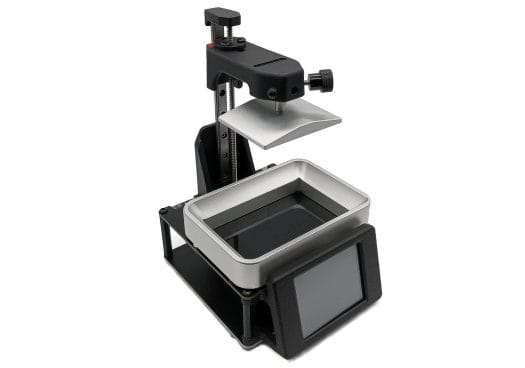
The Lite3DP Gen 2 3D Printer has recently been announced. With a host of new features and improvements, this open-source resin printer aims to provide an affordable and customizable option for enthusiasts and makers.

Key Features & Specifications

  • Electronics: All-in-one PCB with ESP32 microcontroller, high-res LCD, ultra-silent TMC2209 driver, and other components
  • Firmware: Arduino
  • Technology: MSLA, LCD-SLA
  • Resolution: XY: 0.115 mm; Z: 0.025, 0.05, and 0.1 mm
  • Build Volume: 36.7 x 48.8 x 80 mm
  • Tray Volume: 50 cm³ for liquid resin
  • Compatible Resins: All UV 405 nm resins (standard, industrial, flexible, castable, dental, etc)
  • Print Speed: Up to 40 mm/h
  • Data Input: Micro SD card for autonomous operation
  • Misc: Buttons, capacitive touch buttons, passive heat dissipation, touchscreen
  • Power Supply: 12 V, 5.5×2.1 mm, ≥1 A
  • Power Consumption: Less than 10 W
  • Dimensions: 100 x 100 x 167 mm
  • Weight: 470 grams

Improvements Over the Previous Model

The Lite3DP Gen 2 features several enhancements, including a redesigned body, the replacement of the Arduino Pro Mini with an ESP32 microcontroller, and backward compatibility with the Lite 3DP S1 model. Owners of existing Lite3DP printers can utilize a Gen 2 dev kit to upgrade their machines.

Complete Open-Source Solution

A standout feature of the Gen 2 3D Printer is its complete open-source nature. Both the firmware and hardware, along with the software, are open for modification. The GitHub repository hosts schematics, Gerber files, code, and other essential resources, allowing users to build their versions of an mSLA resin printer.

Affordable and Customizable

While the Lite3DP Gen 2 might not boast the most impressive specifications and feature list compared to commercial alternatives, its open-source architecture makes it easier to repair, maintain, and customize. Priced at $229 for the pre-assembled product and $115 for the dev kit (excluding shipping fees of $8 to the United States and $18 to the rest of the world), it offers a cost-effective solution for those looking to explore resin 3D printing.

Crowd Supply Launch

Lite3DP Gen 2 was launched on Crowd Supply last November, and the funding campaign is set to conclude on December 21.

Source: CNX Software – Embedded Systems News.
Topton FU02 Fanless Mini PC With Ryzen 7 7730U Processor

Topton FU02 Fanless Mini PC With Ryzen 7 7730U Processor

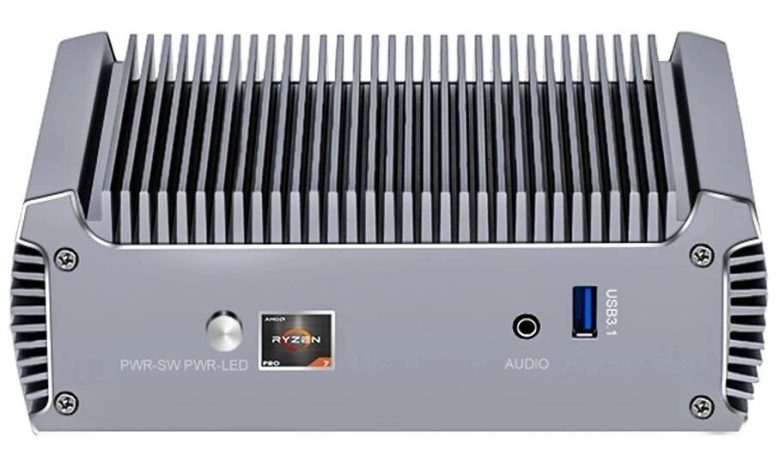
Topton has unveiled an updated version of its small fanless computer, the Topton FU02, featuring an aluminum body with heat-spreading fins on the top and sides. Initially supporting up to an AMD Ryzen 7 4700U processor, the latest release introduces newer processor options, including Ryzen 5000U and Ryzen 7000U processors.

Key Features

  • The highest performance version now includes the AMD Ryzen 7 7730U chip.
  • While the Ryzen 7 7730U shares similarities with the Ryzen 7 5825U, it is a technically newer chip, potentially offering longer support and achieving slightly higher scores in certain synthetic benchmarks.

In addition, the Topton FU02 is available as a barebones model, starting at a base price without memory, storage, or a wireless card. Customers have the option to purchase a fully equipped model, featuring up to 64GB of dual-channel memory, up to 2TB of storage, and a WiFi 6 & Bluetooth 5.2 wireless card. The computer is designed with two SODIMM slots for DDR4-3200 memory, an M.2 2280 slot for PCIe 3.0 x4 NVMe storage, and a 2.5-inch bay for a hard drive or SSD.

Ports

The Topton FU02 features a variety of ports, including:

  • 2 x Gigabit Ethernet
  • 2 x HDMI 2.0
  • 3 x USB 3.1 Type-C
  • 2 x USB 2.0 Type-A
  • 1 x 3.5mm audio

Topton highlights that the computer not only operates silently due to its fanless design but also features an aluminum enclosure that is dust and moisture-proof or at least resistant.

Source: Liliputing.

ADLINK AMD Ryzen Embedded V3000 COM Express Type 7 Module: Supports 64GB DDR5 Memory

ADLINK AMD Ryzen Embedded V3000 COM Express Type 7 Module: Supports 64GB DDR5 Memory

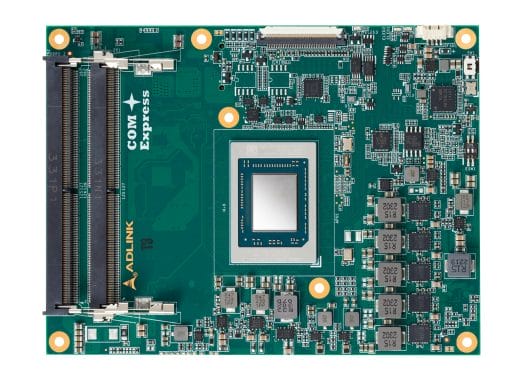
ADLINK has introduced the Express VR7, a COM Express Basic size Type 7 computer-on-module that is powered by the eight-core AMD Ryzen Embedded V3000 processor. The module features two 10GbE interfaces, fourteen PCIe Gen 4 lanes, and optional support for an “extreme temperature range” between -40°C and 85°C.

The ADLINK Express VR7 supports up to 64GB dual-channel DDR5 SO-DIMM memory (ECC/non-ECC). It is designed for headless embedded applications such as edge networking equipment, 5G infrastructure at the edge, video storage analytics, intelligent surveillance, industrial automation and control, and rugged edge servers.

Specifications:

  • SoC: AMD Embedded Ryzen V3000
    • Ryzen V3C48 8-core/16-thread processor @ 3.3/3.8GHz; TDP: 45W
    • Ryzen V3C44 4-core/8-thread processor @ 3.5/3.8GHz; TDP: 45W
    • Ryzen V3C18I 8-core/16-thread processor 1.9/3.8GHz; TDP: 15W (useful in the extreme temperature range)
    • Ryzen V3C16 6-core/12-thread processor 2.0/3.8GHz; TDP: 15W
    • Ryzen V3C14 4-core/8-thread processor 2.3/3.8GHz; TDP: 15W
  • System Memory: Up to 64GB (2x 32GB) dual-channel ECC/non-ECC DDR5 memory up to 4800 MT/s via two SODIMM sockets
  • On-module chips:
    • Embedded BIOS: AMI UEFI with CMOS backup in 32 or 16MB (TBC) SPI BIOS (dual BIOS by build option)
    • Intel i226 2.5GbE controller
  • 2x 220-pin connectors with:
    • Storage: 2x SATA III 6 Gbps
    • Networking:
      • 2x 10GBASE-KR and its sideband signals
      • 1x 2.5GbE interface
    • USB: 4x USB 3.x/2.0/1.1
    • Expansion buses:
      • 8x PCI Express Gen4: Lanes 16-23 (configurable to one x8, two x4, two controller)
      • 4x PCI Express Gen4: Lanes 0-3 (configurable to four x1, two x2, one x4, four controller)
      • 2x PCI Express Gen4: Lanes 4-5 (configurable to one x1, one x2, one controller)
      • LPC bus (through an ESPI to LPC bridge IC), SMBus (system), I2C (user), GP_SPU (user, project basis)
    • Serial: 2x UART ports with console redirection
    • IOs: 4x GPO and 4x GPI (with interrupt)
  • SEMA Board Controller: Voltage/current monitoring, power sequence debug support, AT/ATX mode control, logistics and forensic information, flat panel control, general purpose I2C, watchdog timer, fan control and failsafe BIOS (dual BIOS by build option)
  • Optional IPMB (in conjunction with carrier BMC for remote management Controller applications) by build option
  • Super I/O: Supported on carrier if needed (standard support for W83627DHG-P, other Super I/O supported on request)
  • Debug Headers: 40-pin multipurpose flat cable connector for use with DB40-HPC debug module providing BIOS POST code LED, EC access, SPI BIOS flashing, power testpoints, debug LEDs
  • Security: Infineon TPM 2.0 (SPI based)
  • Power Management:
    • Standard Input: ATX: 12V±5% / 5Vsb ±5%; or AT: 12V±5%
    • ACPI 5.0 compliant
    • Power States: C1-C6, S0, S1, S3, S4, S5, S5 ECO mode (Wake on USB S3/S4, WOL S3/S4/S5)
  • Dimensions: 125 x 95 mm (PICMG COM.0: Rev 3.1 Type 7 Basic size)
  • Temperature Range:
    • Operating: Standard: 0°C to 60°C; Extreme Rugged: -45°C to 85°C (build option, selected SKUs)
    • Storage: Standard: -20°C to 80°C; Extreme Rugged: -40°C to 85°C
  • Humidity:
    • 5-90% RH operating, non-condensing
    • 5-95% RH storage (and operating with conformal coating)
  • Shock and Vibration:
    • IEC 60068-2-64 and IEC-60068-2-27
    • MIL-STD-202F, Method 213B, Table 213-I, Condition A and Method 214A, Table 214-I, Condition D
  • HALT: Thermal Stress, Vibration Stress, Thermal Shock and Combined Test

ADLINK provides standard support for Yocto Linux and Ubuntu 20.04.3 LTS, as well as extended support for Yocto Project-based Linux. The company plans to offer I-Pi development kits based on the Express-VR7 module for easy prototyping and evaluation.

The availability of the Express-VR7 COM Express module based on the AMD Ryzen Embedded V3000 SoC has not been confirmed at this time. Additional details can be found on the product page.

Source: CNX Software – Embedded Systems News.
Raspberry Pi 5 Introduces 5G Modem HAT with Quectel RM502Q-AE M.2 Module

Sixfab has introduced a 5G Modem Kit designed for the Raspberry Pi 5, featuring the Quectel RM502Q-AE 5G Sub-6GHz M.2 module, a proprietary internal antenna for Sub-6 frequency bands, and a USB 3.0 bridge connector. The Sixfab 5G Modem Kit for Raspberry Pi 5 includes a variety of specifications:

  • Sixfab 5G Modem HAT for Raspberry Pi 5
    • M.2 socket for 5G module
    • Nano SIM card holder + embedded SIM
    • USB 3.0 port and 40-pin GPIO header for connection to the Raspberry Pi 5 SBC
    • Misc
      • User button
      • Status, power, and user (GPIO21) LEDs
      • EEPROM for Raspberry Pi HAT compliance
      • 2-pin fan connector
    • Power Supply – 5V via USB Type-C port (on HAT itself)
    • Dimensions – 88.1 x 57.7 x 21.7 mm
    • Approvals – FCC, IC, CE, UKCA are in progress
  • Quectel RM502Q-AE M.2 module
    • 5G NR: 3GPP Release 15 NSA/SA operation, Sub-6 GHz
    • LTE Category: DL Cat 20/ UL Cat 18
    • Max data rates
      • 5G SA Sub-6 – Max. 4.2 Gbps (DL)/Max. 450 Mbps (UL)
      • 5G NSA Sub-6 – Max. 5 Gbps (DL)/Max. 650 Mbps (UL)
    • Host interfaces – USB 3.1 or PCIe 3.0
    • Dimensions – 52 x 30.0 × 2.3mm
    • Weight – 8.4 grams
  • Extra tall 40-pin GPIO stacking header
  • Power Supply – 5.1V 3.0A DC power adaptor with universal plugs
  • Plastic spacer kit

The kit, priced at $450, is compatible with various boards and computers, including the NVIDIA Jetson Nano Developer Kit, Beaglebone SBC, Asus Tinkerboard, NXP i.MX 8 devkits, and regular PCs, offering drivers and tools for both Windows and Linux. Additional components required for operation include a Raspberry Pi 5, a microSD card for the OS, a 5G SIM card (unless using the eSIM is an option), and an extra 5V USB-C power supply to separately power the Raspberry Pi 5 and Sixfab HAT.

Source: CNX Software – Embedded Systems News.

Radxa ROCK 3B: Fusion of Pico-ITX and Raspberry Pi Form Factors

Radxa has released the ROCK 3B, a “PI-CO ITX” single-board computer (SBC) that combines the benefits of Pico-ITX and Raspberry Pi form factors. The board, measuring 100x72mm, features all main ports on the rear side and supports expansion through a 40-pin Raspberry Pi-compatible GPIO header and several M.2 sockets for storage and wireless modules. The ROCK 3B is the larger brother of the ROCK 3A, a business card-sized SBC introduced in 2021. Both boards are powered by the Rockchip RK3568 SoC and support up to 8GB LPDDR4. The ROCK 3B features two gigabit Ethernet ports, an M.2 B Key socket for 4G LTE/5G cellular modules, an M.2 PCIe 3.0 x1 socket for an M.2 2280 SSD, and an M.2 Key-E socket for WiFi 6.

The specifications of the ROCK 3B include:

  • SoC: Rockchip RK3568 (J)
    • CPU: Quad-core Cortex A55 processor at up to 2.0 GHz
    • GPU: Mali G52 GPU with support for OpenGL ES 1.1/2.0/3.2, OpenCL 2.0, Vulkan 1.1
    • VPU: 4Kp60 H.264/H.265/VP9 video decoder, 1080p60 H.264/H.265 video encoder
    • AI accelerator: 1 TOPS NPU; INT8/INT16/FP16/BFP16 MAC hybrid operation; support for TensorFlow, TF-lite, Pytorch, Caffe, ONNX, MXNet, Keras, Darknet
  • System Memory: 2GB, 4GB, 8GB LPDDR4
  • Storage: Pluggable eMMC module, MicroSD card slot, M.2 M key socket for NVMe with PCIe 3.0 x2
  • Video Output: HDMI 2.0 port up to 4Kp60, 2x MIPI DSI connectors (4-lane and 2-lane), eDP connector, Touch Panel connector
  • Camera: 1x MIPI CSI connector
  • Audio: 3.5mm audio jack, digital audio via HDMI
  • Connectivity: 2x Gigabit Ethernet ports, WiFi 6 via M.2 E key socket with PCIe 2.0 x1/SDIO/UART, 4G LTE/5G cellular via M.2 B key 3042 socket with PCIe, SATA, USB interfaces, and a SIM card socket
  • USB: 2x USB 2.0 ports, 2x USB 3.0 ports (1x OTG+1x HOST)
  • Expansion: Color-coded 40-pin GPIO header mostly compatible with ROCK Pi 4 and Raspberry Pi 3/4, exposing 5x UART, 1x SPI, 2x I2C, 1x PCM/I2S, 1x CAN bus, 6x PWM, 1x ADC, 6x GPIO, 1x USB 2.0, and 5V, 3.3V, and GND power signals
  • Misc: RTC with connector for backup battery, IR receiver, RGB LED, Fan header, Power and recovery buttons
  • Power Supply: 6V to 20V DC via USB-C port with USB PD 2.0, QC 3.0, or fixed voltage support, 5V via GPIO pin 2 or 4
  • Dimensions: 100 x 75 mm (Pico-ITX and PI-CO ITX form factors)
  • Certifications: CE/FCC

The Rock 3B was first unveiled in 2021 with a slightly different design, which was modified based on user feedback. The board is now available for purchase, with prices starting at $45 for the 2GB RAM version, $55 for the 4GB RAM version, and $75 for the 8GB RAM version on Arace Tech. However, it may be challenging to find compatible accessories as the website’s accessories section is not clear, and some accessories are missing.

Source: CNX Software – Embedded Systems News.