Posts for: #open-source

Tillitis Tkey: An Open-Source USB-C RISC-V Security Key

Tillitis Tkey: An Open-Source USB-C RISC-V Security Key

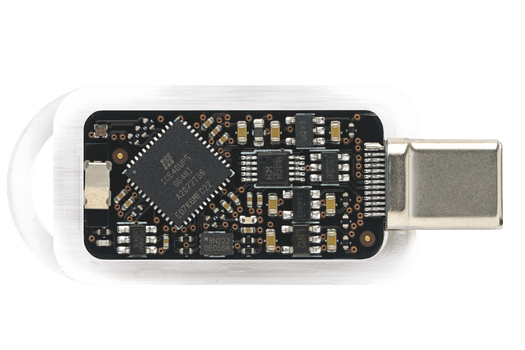
The Tillitis TKey is a unique USB-C security key based on a 32-bit RISC-V core, specifically the PicoRV32, housed in a Lattice iCE40 UP5K FPGA. Described as a “new type of flexible USB security token,” it draws inspiration from DICE (Device Identifier Composition Engine) and measured boot technologies. Unlike traditional security keys with persistent onboard storage, the TKey relies on loading apps onto the key each time it connects to a host device. This method, employing measured boot, generates a distinct identifier for each application, enhancing security by avoiding the storage of private keys on the device. Both the hardware and software for the TKey are entirely open-source, ensuring trustability. Developed by Tillitis, a Swedish security firm, the TKey has two versions: locked and unlocked. The locked version, targeting general users, is not reprogrammable, while the unlocked version allows full configuration using the Tillitis TK Programmer, based on a Raspberry Pi Pico, for added flexibility. Tillitis specializes in hardware trust products and emerged as a separate entity from the Mullvad VPN company in 2022.

Specifications:

  • Processor:
    • 32-bit RISC-V PicoRV32 core @ 18 MHz
    • FPGA: Lattice iCE40 UP5K
    • 128 KiB RAM for TKey device application
    • 2 KiB RAM for firmware
    • 6 KiB ROM
    • Execution monitor
    • RAM protection
  • Connector: USB-C
  • Hardware Privilege Modes: Firmware mode and application mode
  • Misc: Touch sensor, power indicator, status indicator
  • Input voltage: 5V
  • Max current consumption: 100mA
  • Operating temperature: 0°C – 40°C

The Tillitis TKey RISC-V security key can be purchased from the Tillitis shop. The end-user version and the advanced user version are priced at 880 Swedish kronor (about $90), while the programmer is priced at 500 Swedish kronor (around $50).

Source: CNX Software – Embedded Systems News.
Lite3DP Gen 2: A Compact, Open-Source Resin 3D Printer

Lite3DP Gen 2: A Compact, Open-Source Resin 3D Printer

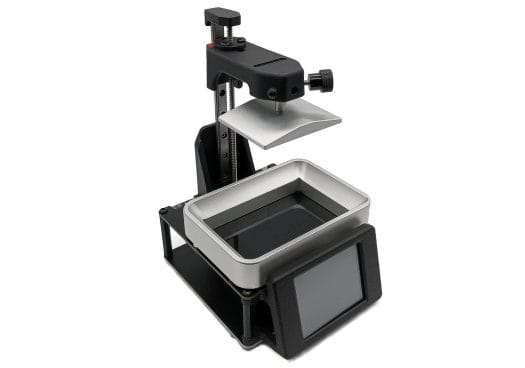
The Lite3DP Gen 2 3D Printer has recently been announced. With a host of new features and improvements, this open-source resin printer aims to provide an affordable and customizable option for enthusiasts and makers.

Key Features & Specifications

  • Electronics: All-in-one PCB with ESP32 microcontroller, high-res LCD, ultra-silent TMC2209 driver, and other components
  • Firmware: Arduino
  • Technology: MSLA, LCD-SLA
  • Resolution: XY: 0.115 mm; Z: 0.025, 0.05, and 0.1 mm
  • Build Volume: 36.7 x 48.8 x 80 mm
  • Tray Volume: 50 cm³ for liquid resin
  • Compatible Resins: All UV 405 nm resins (standard, industrial, flexible, castable, dental, etc)
  • Print Speed: Up to 40 mm/h
  • Data Input: Micro SD card for autonomous operation
  • Misc: Buttons, capacitive touch buttons, passive heat dissipation, touchscreen
  • Power Supply: 12 V, 5.5×2.1 mm, ≥1 A
  • Power Consumption: Less than 10 W
  • Dimensions: 100 x 100 x 167 mm
  • Weight: 470 grams

Improvements Over the Previous Model

The Lite3DP Gen 2 features several enhancements, including a redesigned body, the replacement of the Arduino Pro Mini with an ESP32 microcontroller, and backward compatibility with the Lite 3DP S1 model. Owners of existing Lite3DP printers can utilize a Gen 2 dev kit to upgrade their machines.

Complete Open-Source Solution

A standout feature of the Gen 2 3D Printer is its complete open-source nature. Both the firmware and hardware, along with the software, are open for modification. The GitHub repository hosts schematics, Gerber files, code, and other essential resources, allowing users to build their versions of an mSLA resin printer.

Affordable and Customizable

While the Lite3DP Gen 2 might not boast the most impressive specifications and feature list compared to commercial alternatives, its open-source architecture makes it easier to repair, maintain, and customize. Priced at $229 for the pre-assembled product and $115 for the dev kit (excluding shipping fees of $8 to the United States and $18 to the rest of the world), it offers a cost-effective solution for those looking to explore resin 3D printing.

Crowd Supply Launch

Lite3DP Gen 2 was launched on Crowd Supply last November, and the funding campaign is set to conclude on December 21.

Source: CNX Software – Embedded Systems News.

Olimex Unveils STMicro STM32MP157 SoM and Open-Source Hardware EVB

Olimex has recently released the STMP157-BASE-SOM-EXT system-on-module (SoM) powered by an STMicro STM32MP157 dual-core Cortex-A7 microprocessor. The SoM is accompanied by the STMP157-BASE-SOM-EVB evaluation board, which is open-source hardware designed in KiCAD. The CPU module features 1GB RAM, an EEPROM for configuration, and power management circuitry. The carrier board provides various interfaces and features including HDMI video output, LCD display interfaces, a 2MP camera, gigabit Ethernet, USB ports, CAN bus terminal block, audio jacks, and several GPIO headers.

The specifications of the STMP157-BASE-SOM-EXT System-on-Module are as follows:

  • Microprocessor: STMicro STM32MP157DAA1 dual-core Cortex-A7 processor @ 800 MHz with Arm Cortex-M4 real-time core @ 209 MHz, and Vivante 3D GPU with OpenGL ES 2.0 support
  • System Memory: 1GB DDR3
  • Storage: Linux configuration EEPROM
  • Host interface: 6x 40-pin board-to-board connectors with 1.27mm pitch for I/Os
  • Misc: User LED, 24 MHz oscillator
  • Power Management: AXP209 PMIC, LDO, DCDC power management
  • Dimensions: 72 x 48 mm

The STMP157-BASE-SOM-EVB carrier board is compatible with the STMP157-BASE-SOM-EXT CPU module and offers the following specifications:

  • Storage: MicroSD card slot
  • Video Output: HDMI output, MIPI LCD connector, RGB LCD connector compatible with LCD-OLinuXino-5CTS, LCD-OLinuXino-7.0CTS, LCD-OLinuXino-10CTS
  • Camera: 2MP MIPI CSI camera (OV2640-120 sensor)
  • Audio: 3.5mm headphones jack, 3.5mm microphone jack
  • Networking: Gigabit Ethernet port
  • USB: 2x USB 2.0 Type-A host ports, 1x USB OTG port
  • Serial: 2x CAN Bus terminal blocks
  • Expansion: UEXT connector, EXT1 and EXT2 GPIO connectors
  • Debugging: 3-pin UART connector, optional JTAG connector (not populated)
  • Misc: Reset button, Power LED, flash module connector, boot configuration slide switch
  • Power Supply: 5V/2A via power barrel jack, 2-pin connector for LiPo battery with built-in charging circuit
  • Dimensions: 122 x 106 mm

Olimex provides a minimal Debian 11 image with Linux 6.x for both the module and EVB. User manuals, PDF schematics, and a Linux user guide can be found on the product page for the SoM, while the KiCAD hardware design files, PDF schematics, and user manual for the EVB can be found on GitHub. Pre-orders for the STM32MP157 SoM and EVB are now available for 30 Euros each, with shipping scheduled to begin on November 30. More documentation and the option to purchase can be found on the respective product pages.

Source: CNX Software – Embedded Systems News.

Affordable Olimex RT1010-Py Board: MicroPython on 500 MHz NXP i.MX RT1011 Cortex-M7 MCU

Olimex has released the RT1010-Py board, a small development board powered by a 500 MHz NXP i.MX RT1011 Cortex-M7 MCU. The board is designed to run MicroPython and is about four times faster than the Raspberry Pi Pico.

The RT1010-Py board features two 20-pin GPIO headers that expose various interfaces such as SPI and I2C. It also includes a microSD card slot for storage, two buttons, and a USB-C Type port for power and programming. Additionally, the board has a 12-pin fUEXT connector that allows users to connect Olimex’s UEXT modules via a flat cable.

In terms of specifications, the RT1010-Py board is equipped with an NXP iMX RT1011 crossover microcontroller, which features an Arm Cortex-M7 clocked at 500 MHz and 128KB SRAM/TCM. It has 2MB SPI Flash storage and a microSD card slot for additional storage. The board also has a USB 2.0 OTG Type-C port for connectivity.

Expansion options on the RT1010-Py board include two 20-pin headers with up to 15x GPIO, 3x UART, 2x SPI, 2x I2C, 1x I2S, 4x PWM, and 5x analog inputs. It also features an fUEXT connector with support for 3.3V, GND, I2C, SPI, and UART.

Other features of the RT1010-Py board include an RTC with a 32.768 kHz crystal, RESET and BOOT buttons, and power supply via a 5V USB-C port. The board has dimensions of 53.34 x 25.4 mm.

The NXP i.MX RT1010 board can run MicroPython with support for all hardware interfaces such as GPIO, I2C, and SPI. The user manual for the board is available in PDF format. The board also supports PlatformIO, although there are no board-specific documentation for it. The KiCAD and PDF schematics for the board are available on Olimex’s GitHub page.

For easier expansion, Olimex has designed the RT1010Py-DevKit as a carrier board for the RT1010-Py board. The devkit features support for the RT1010-Py board via 2x 20-pin headers. It also includes 2x 250VAC/10A relays, 2x UEXT connectors for expansion modules, a boot configuration slide switch, status LEDs, power and user buttons, and a USB-C power supply connector. The RT1010Py-DevKit has dimensions of 75 x 55 mm.

While the RT1010Py-DevKit is supposed to be open-source hardware, the schematics and user manual have not been released yet.

The RT1010-Py board is available for purchase from Olimex for 15 Euros, while the RT1010Py-DevKit is available for an additional 10 Euros. It is worth noting that Adafruit has previously launched a larger NXP i.MX RT1010 board called the Metro M7, which follows the Arduino UNO form factor and supports CircuitPython.

Source: CNX Software – Embedded Systems News.

Introducing OpenTofu: The Linux Foundation’s Open Source Alternative to Terraform

The Linux Foundation has announced the launch of OpenTofu, an open-source alternative to Terraform’s infrastructure as code provisioning tool. OpenTofu was created in response to Terraform’s recent license change, which raised concerns within the open-source community. OpenTofu is community-driven, impartial, layered, modular, and backward-compatible. It has received support from industry leaders and has formal pledges from over 140 organizations and 600 individuals. The Linux Foundation emphasizes the importance of open collaboration and innovation in the infrastructure as code field.

OpenTofu aims to be a reliable, accessible, and truly open-source solution.

Source: Linux Foundation.