Posts for: #raspberry-pi

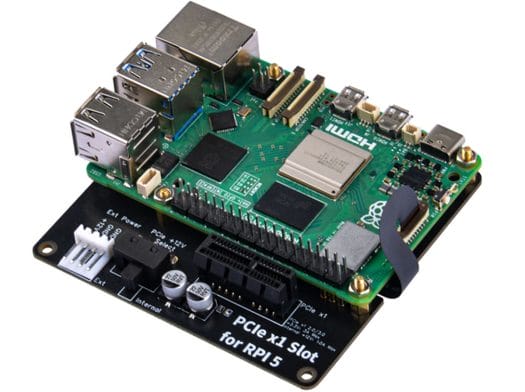
52Pi P02 PCIe Expansion Board for Raspberry Pi 5 with PCIe x1 Slot

52Pi P02 PCIe Expansion Board for Raspberry Pi 5 with PCIe x1 Slot

The 52Pi P02 is a PCIe expansion board designed specifically for the Raspberry Pi 5. It converts the Raspberry Pi’s built-in PCIe into a PCIe x1 slot, facilitating the connection of a wide range of off-the-shelf accessories such as network cards, USB expansions, and even GPUs with the use of a PCIe riser. This board is an intriguing addition to the Raspberry Pi ecosystem, offering enhanced functionality and flexibility for users looking to expand their Raspberry Pi projects.

52Pi P02 PCIe Expansion Board Specification:

  • Compatibility: Designed exclusively for the Raspberry Pi 5.
  • Open Slot Design: Supports PCIe cards of x1, x2, x4, x8, x16 sizes.
  • PCIe x1 Support: Compatible with Gen2 and Gen3 PCIe x1 interfaces.
  • Integrated Power Supply: Features a 12V power supply capable of up to 1A, with an additional external 12V input.
  • PCIe Ultra-short Signal Lines: Ensures stable and fast communication by using short paths for PCIe, meeting PCIe 3.0 standards.
  • Power Outputs: Provides +12V/1A and +3.3V/3A to the PCIe x1 slot.
  • Dimensions: Measures 85x80mm.

The 52Pi P02 board is aimed at users looking to enhance their Raspberry Pi 5’s capabilities, be it for adding a large GPU, fast 10GbE networking, or transforming their Pi into a home server. The company also offers a wiki page with detailed hardware information and instructions for enabling PCIe x1 on the Raspberry Pi, as well as assembly guidelines.

The 52Pi P02 PCIe expansion board is available for pre-sale at a price of $24.99 on the 52Pi online store, making it a cost-effective solution for expanding the functionality of the Raspberry Pi 5.

Source: CNX Software – Embedded Systems News.
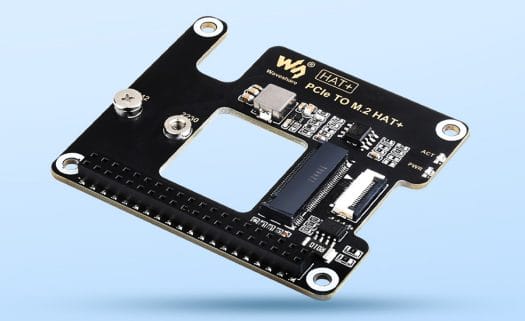
Affordable Waveshare PCIe to M.2 Adapter for Raspberry Pi 5

Affordable Waveshare PCIe to M.2 Adapter for Raspberry Pi 5

The Waveshare PCIe To M.2 adapter is an affordable PCIe to M.2 HAT+ module designed specifically for the Raspberry Pi 5.

It supports PCIe Gen2 and Gen3 SSDs and is compatible with standard SSD sizes of 2230/2242. The adapter features status indicator LEDs, a power monitoring chip, an EEPROM, and a cooling fan vent to manage temperatures during heavy use. This adapter is not the first of its kind for the Raspberry Pi 5, as other options like the PineBerry Pi’s HatDrive and the Pimoroni NVMe Base have been previously explored. The Waveshare PCIe To M.2 adapter shares a similar form factor with Waveshare’s PoE HAT(F), which uses the new HAT+ standard to provide 24W of power to the Raspberry Pi 5.

The adapter’s specifications include compatibility with Raspberry Pi 5 SBC, M.2 SSD interface compatibility, a compact form factor, status indicator LEDs, an EEPROM, and a power monitoring chip.

The package includes the PCIe To M.2 HAT, a double-row 20-pin header, a 16-pin cable, and a set of standoffs for mounting. The product dimensions are 65.00 x 56.50 mm.

The Waveshare PCIe To M.2 adapter is available for purchase for $8.99 on the company’s online store, and it’s also availble on other online stores.

Source: CNX Software – Embedded Systems News.
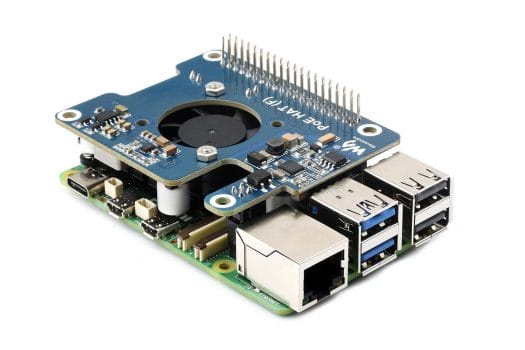
Waveshare Releases PoE HAT+ Kit, the PoE HAT(F)

Waveshare Releases PoE HAT+ Kit, the PoE HAT(F)

Waveshare has released the PoE HAT(F), an 802.3af/at-compliant 24W Power-over-Ethernet (PoE) board designed for the Raspberry Pi 5. This HAT also includes a cooling solution for the SBC, featuring an embedded fan, a heatsink, and two thermal pads.

The Waveshare PoE HAT(F) features the following specifications:

  • Connection: 40-pin Raspberry Pi GPIO header and 4-pin PoE header
  • PoE (Power Over Ethernet):
    • IEEE 802.3af/at compliant
    • Input voltage: 37V-57V DC input
    • Output:
      • 2-pin header: 12V/2A max
      • GPIO header: 5V/4.5A max
  • Fully isolated switched-mode power supply (SMPS)
  • MP8759GD buck converter chip
  • Cooling: Fan, metal heatsink, and thermal pads for heat dissipation
  • Dimensions: 70 x 56.5 mm

The Waveshare PoE Hat(F) is currently available for purchase on Amazon, AliExpress, and on Waveshare’s online store.

Source: CNX Software – Embedded Systems News.
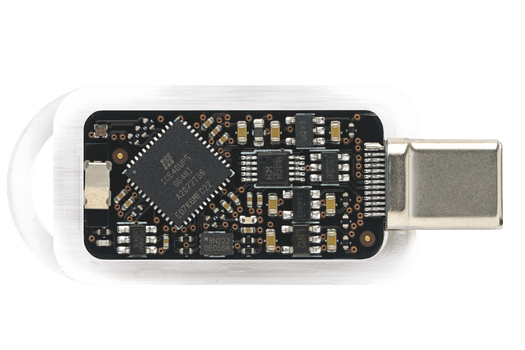
Tillitis Tkey: An Open-Source USB-C RISC-V Security Key

Tillitis Tkey: An Open-Source USB-C RISC-V Security Key

The Tillitis TKey is a unique USB-C security key based on a 32-bit RISC-V core, specifically the PicoRV32, housed in a Lattice iCE40 UP5K FPGA. Described as a “new type of flexible USB security token,” it draws inspiration from DICE (Device Identifier Composition Engine) and measured boot technologies. Unlike traditional security keys with persistent onboard storage, the TKey relies on loading apps onto the key each time it connects to a host device. This method, employing measured boot, generates a distinct identifier for each application, enhancing security by avoiding the storage of private keys on the device. Both the hardware and software for the TKey are entirely open-source, ensuring trustability. Developed by Tillitis, a Swedish security firm, the TKey has two versions: locked and unlocked. The locked version, targeting general users, is not reprogrammable, while the unlocked version allows full configuration using the Tillitis TK Programmer, based on a Raspberry Pi Pico, for added flexibility. Tillitis specializes in hardware trust products and emerged as a separate entity from the Mullvad VPN company in 2022.

Specifications:

  • Processor:
    • 32-bit RISC-V PicoRV32 core @ 18 MHz
    • FPGA: Lattice iCE40 UP5K
    • 128 KiB RAM for TKey device application
    • 2 KiB RAM for firmware
    • 6 KiB ROM
    • Execution monitor
    • RAM protection
  • Connector: USB-C
  • Hardware Privilege Modes: Firmware mode and application mode
  • Misc: Touch sensor, power indicator, status indicator
  • Input voltage: 5V
  • Max current consumption: 100mA
  • Operating temperature: 0°C – 40°C

The Tillitis TKey RISC-V security key can be purchased from the Tillitis shop. The end-user version and the advanced user version are priced at 880 Swedish kronor (about $90), while the programmer is priced at 500 Swedish kronor (around $50).

Source: CNX Software – Embedded Systems News.
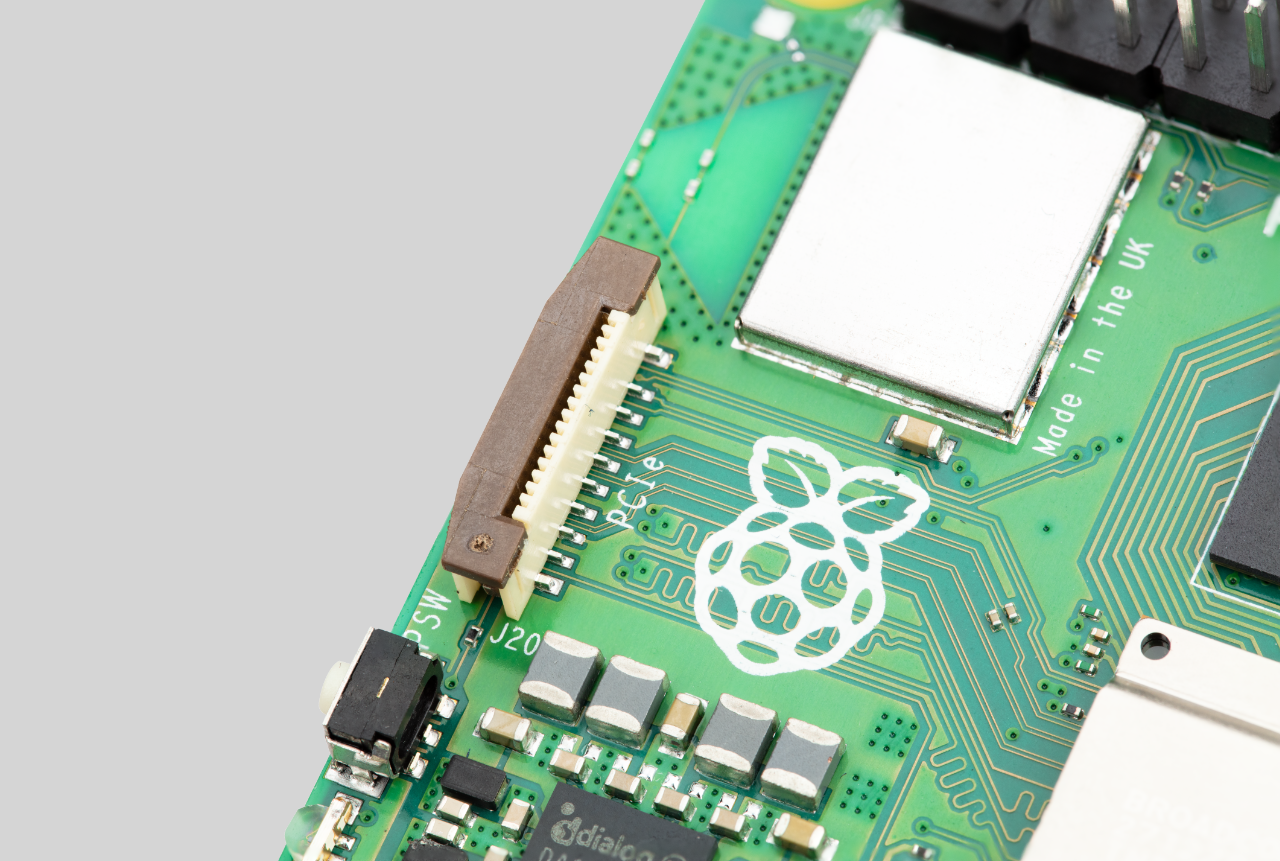
Raspberry Pi Unveils PCIe FFC Connector and New HAT+ Specifications

Raspberry Pi Unveils PCIe FFC Connector and New HAT+ Specifications

One of the most notable features of the new Raspberry Pi platform is its small, vertical, 16-way FFC (Flat Flexible Cable) connector on the left-hand side of the board. This connector exposes a single-lane PCI Express interface.

The Peripheral Component Interconnect Express (PCI Express or PCIe) is a board-level interconnect that enables high-speed data transfer between a processor chip and external peripherals such as NVMe SSDs, Ethernet cards, and AI/ML accelerators. PCIe achieves this by serializing data transfers and sending one bit at a time down a single channel. Each channel consists of one or more differential pairs on the PCB, which are controlled waveguides made by closely spaced wires. In the case of a single-lane PCIe interface, there is a single transmit pair, a single receive pair, and a clock pair, requiring three differential pairs and six wires. The Raspberry Pi 5, based on the BCM2712 processor, is connected to the RP1 I/O controller via an ×4 interface.

The PCIe specification also requires sideband signals such as reset, clock request, and wakeup. The 16-way connector on the Raspberry Pi provides all these signals, along with two pins for controlling board power and automatically detecting a properly designed PIP (PCIe Peripheral) by the Raspberry Pi firmware.

Instead of adding an M.2 connector to the Raspberry Pi 5, which would be large, relatively expensive, and require a 3.3V, 3A power supply, the Raspberry Pi team opted for a small, low-cost FFC connector. This allowed them to provide a PCIe interface without increasing the board size or imposing additional costs on users.

At the launch of the Raspberry Pi 5, the team did not have a specification for building peripherals that attach to the 16-way PCIe connector. They wanted to thoroughly test their own prototype product and consider the interaction of PCIe peripherals with Raspberry Pi power states and firmware. They have now released the first revision of the specification and are in the final stage of prototyping their own M.2 M Key HAT+. This HAT+ will be launched early next year.

In addition to the PCIe connector specification, the Raspberry Pi team has also released a preliminary version of the new HAT+ specification. The original HAT specification, written in 2014, is in need of an update. The new specification simplifies certain aspects, including the required EEPROM contents, and consolidates everything into one document. It also adds new features. While there is still work to be done on this standard and the EEPROM utilities have not been updated, this release provides a glimpse into the changes in the HAT standard.

The Raspberry Pi team wanted to ensure that the HAT+ standard is developed correctly, as it is expected to be in use for as long as the old HAT standard. They believe that PCIe boards (PIPs) that go on top of the Raspberry Pi should be HAT+ boards, and their own M.2 HAT+ will adhere to this standard.

More information can be found in the first revision of the Raspberry Pi Connector for PCIe datasheet, and the Raspberry Pi HAT+ Specification datasheet.

Raspberry Pi 5 Introduces 5G Modem HAT with Quectel RM502Q-AE M.2 Module

Sixfab has introduced a 5G Modem Kit designed for the Raspberry Pi 5, featuring the Quectel RM502Q-AE 5G Sub-6GHz M.2 module, a proprietary internal antenna for Sub-6 frequency bands, and a USB 3.0 bridge connector. The Sixfab 5G Modem Kit for Raspberry Pi 5 includes a variety of specifications:

  • Sixfab 5G Modem HAT for Raspberry Pi 5
    • M.2 socket for 5G module
    • Nano SIM card holder + embedded SIM
    • USB 3.0 port and 40-pin GPIO header for connection to the Raspberry Pi 5 SBC
    • Misc
      • User button
      • Status, power, and user (GPIO21) LEDs
      • EEPROM for Raspberry Pi HAT compliance
      • 2-pin fan connector
    • Power Supply – 5V via USB Type-C port (on HAT itself)
    • Dimensions – 88.1 x 57.7 x 21.7 mm
    • Approvals – FCC, IC, CE, UKCA are in progress
  • Quectel RM502Q-AE M.2 module
    • 5G NR: 3GPP Release 15 NSA/SA operation, Sub-6 GHz
    • LTE Category: DL Cat 20/ UL Cat 18
    • Max data rates
      • 5G SA Sub-6 – Max. 4.2 Gbps (DL)/Max. 450 Mbps (UL)
      • 5G NSA Sub-6 – Max. 5 Gbps (DL)/Max. 650 Mbps (UL)
    • Host interfaces – USB 3.1 or PCIe 3.0
    • Dimensions – 52 x 30.0 × 2.3mm
    • Weight – 8.4 grams
  • Extra tall 40-pin GPIO stacking header
  • Power Supply – 5.1V 3.0A DC power adaptor with universal plugs
  • Plastic spacer kit

The kit, priced at $450, is compatible with various boards and computers, including the NVIDIA Jetson Nano Developer Kit, Beaglebone SBC, Asus Tinkerboard, NXP i.MX 8 devkits, and regular PCs, offering drivers and tools for both Windows and Linux. Additional components required for operation include a Raspberry Pi 5, a microSD card for the OS, a 5G SIM card (unless using the eSIM is an option), and an extra 5V USB-C power supply to separately power the Raspberry Pi 5 and Sixfab HAT.

Source: CNX Software – Embedded Systems News.