Posts for: #release

NetBSD 10.0-RC2: The Latest BSD Release for Testing

NetBSD 10.0, a significant update for the BSD operating system in development since 2019, reaches a milestone with the availability of its second release candidate, NetBSD 10.0-RC2, for testing.

This follows the earlier release of NetBSD 10-RC1 in November. Noteworthy features of NetBSD 10 include WireGuard support, enhancements for Arm hardware (including Apple Silicon and Raspberry Pi), a new Intel Ethernet driver, Realtek 2.5 GbE network adapter support, multi-core performance enhancements, automatic swap encryption, and various hardware support improvements. The release also incorporates numerous performance optimizations. Detailed information about the features is available on the NetBSD 10.0 release page.

Testing enthusiasts can find NetBSD 10.0-RC2 images on iso.netbsd.org, with hopes for a prompt stable release in the near future.

Source: Phoronix.

Radxa X2L: Affordable Celeron J4125 SBC

Radxa X2L: Affordable Celeron J4125 SBC

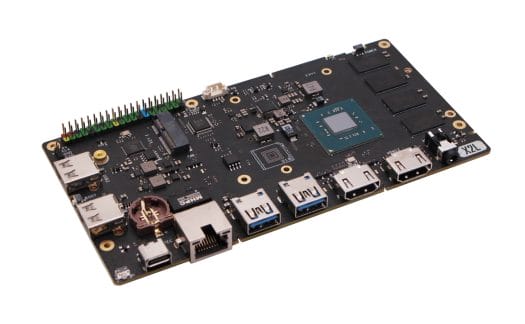
Radxa has released the X2L, an affordable single-board computer (SBC) powered by the Celeron J4125 Gemini Lake Refresh processor. The X2L comes with 2GB to 8GB of RAM, an M.2 socket for SSD storage, and another M.2 socket for a wireless module. It also offers a variety of ports, including dual HDMI, gigabit Ethernet, four USB ports, and a 40-pin GPIO header.

Specifications of the Radxa X2L include:

  • Celeron J4125 quad-core Gemini Lake Refresh processor
  • Raspberry Pi RP2040 microcontroller for GPIO control
  • 2GB, 4GB, or 8GB LPDDR4 RAM
  • 1x M.2 M-Key socket for NVMe SSD storage
  • Optional 32GB eMMC flash
  • 2x HDMI ports
  • 3.5mm headphone jack with microphone input
  • Gigabit Ethernet port
  • Optional WiFi and Bluetooth module
  • 2x USB 3.0 Type-A ports, 2x USB 2.0 Type-A ports
  • 40-pin GPIO header
  • M.2 M-Key socket for NVMe SSD
  • M.2 E-Key socket for wireless module
  • RTC battery socket
  • 4-pin header for PWM fan
  • 3-pin debug header
  • Power button, BOOTSEL button, clear CMOS button, and user button
  • 12V/2A power supply via USB-C port
  • Dimensions of 155 x 80 x 10 mm
  • Temperature range of 0 to 50°C
  • Certifications include FCC and CE

The Radxa X2L is available for purchase starting at $39 on Arace and AllNetChina. This price is for the model with 2GB of RAM. Users will need to add an M.2 SSD and a USB PD power supply. The 8GB model with a 32GB eMMC flash is also available for $79.

Source: CNX Software – Embedded Systems News.

Terramaster Introduces Alder Lake-N Chips to NAS Systems

Terramaster Introduces Alder Lake-N Chips to NAS Systems

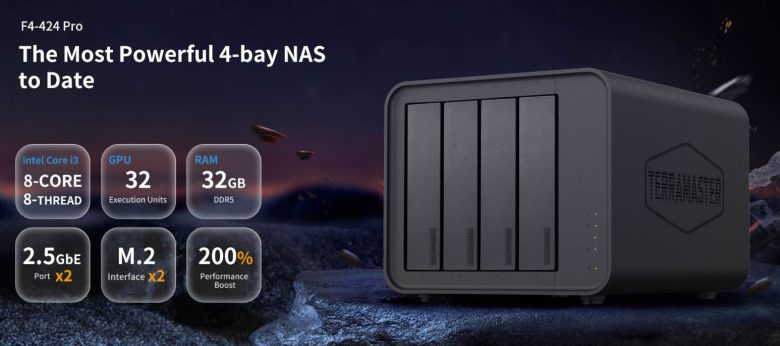
Terramaster, a NAS maker, has introduced three new models featuring Alder Lake-N processors. The Terramaster F2-424 and F4-424 are 2-bay and 4-bay network attached storage systems respectively, while the Terramaster F4-424 Pro is touted as the “most powerful 4-bay NAS in the industry to date.” These NAS systems offer significant performance improvements over previous models, with the Alder Lake-N processors delivering around 25% faster CPU performance and even higher graphics performance compared to older chips. The F2-424 and F4-424 come with 8GB of DDR5 memory, while the F4-424 Pro includes 32GB of RAM.

The specifications for the Terramaster NAS systems are as follows:

  • Terramaster F2-424 and F4-424:
    • Processor: 15-watt N95 CPU with 4 cores, 4 threads, CPU speeds up to 3.4 GHz, and 1.2 GHz UHD integrated graphics
    • Memory: 8GB DDR5 (supports up to 32GB)
  • Terramaster F4-424 Pro:
    • Processor: 7-watt Core i3-N300 CPU with 8 cores, 8 threads, speeds up to 3.8 GHz, and a 1.25 GHz UHD GPU with 32 execution units
    • Memory: 32GB RAM

Prices for the Terramaster NAS systems start at $380 for the 2-bay F2-424 and $500 for the 4-bay F4-424. The high-performance F4-424 Pro is priced at $700. However, it’s important to note that the price does not include hard drives for storage.

In addition to the powerful processors, the new Terramaster NAS systems also offer other notable features. They come with two M.2 2280 slots for PCIe NVMe storage, allowing users to use SSDs for cache or primary storage. The networking features include two 2.5 Gbe Ethernet ports, an HDMI 2.1 port, and two USB 3.2 Gen 2 ports.

While these Terramaster NAS systems offer impressive performance, there are some factors to consider. The Asustor AS5402T, for example, has two SODIMM slots for memory, making it more cost-effective and easier to add memory compared to the Terramaster models. The AS5402T also has four M.2 slots for PCIe NVMe storage, providing more storage expansion options. Other options to consider include Synology and QNAP models.

Source: Liliputing.

The Sipeed Longan Pi3H: A Compact Board with Gigabit Ethernet, WiFi 6, HDMI, and USB

The Sipeed Longan Pi3H: A Compact Board with Gigabit Ethernet, WiFi 6, HDMI, and USB

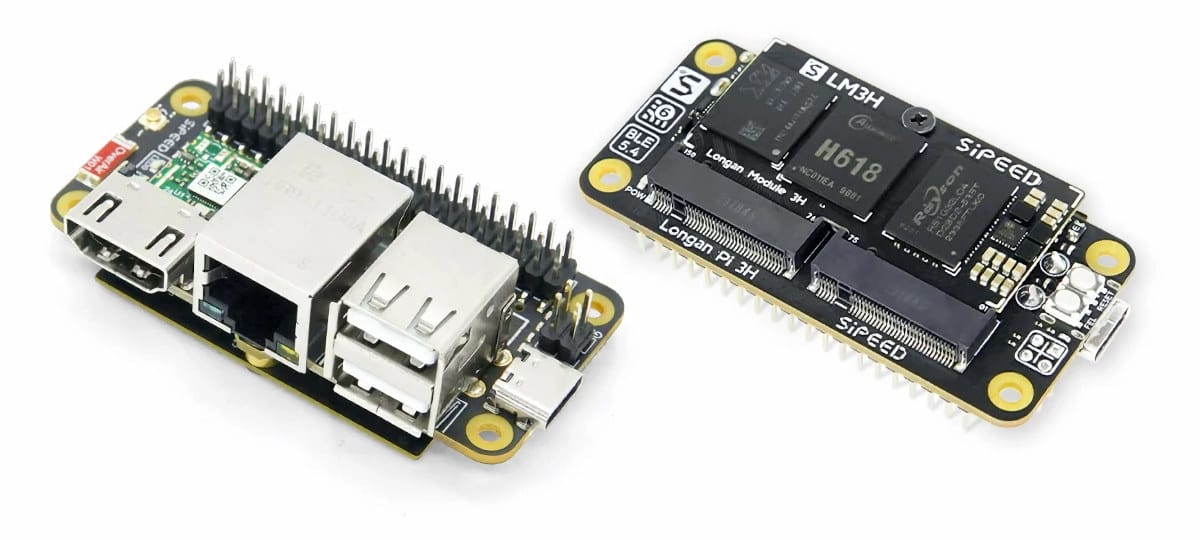
Sipeed has introduced the Longan Pi3H, a single board computer (SBC) that is similar in size to the Raspberry Pi Zero. Powered by an Allwinner H618 quad-core Cortex-A53 processor, the board features full-size connectors including an HDMI 2.0 video output, two USB 2.0 Type-A ports, and a gigabit Ethernet RJ45 jack. It also offers WiFi 6 and Bluetooth 5.4 connectivity, a 40-pin GPIO header, and a USB OTG Type-C port for power. The board is composed of a carrier board and a replaceable LM3H CPU module with the Allwinner H618 SoC, RAM, and eMMC flash.

The Sipeed Longan Pi3H specifications include:

  • SoC – Allwinner H618 with a quad-core Arm Cortex-A53 processor, up to 1.5GHz, and 1MB L2 cache
  • GPU – Arm Mali-G31 MP2 GPU with support for OpenGL ES 1.0/2.0/3.2, OpenCL 2.0, Vulkan 1.1
  • VPU with support for various video formats
  • System Memory – 2GB or 4GB LPDDR4
  • Storage options include a microSD card slot and optional 32GB eMMC flash
  • Video & Audio Output – HDMI 2.0a up to 4Kp60
  • Networking features a gigabit Ethernet RJ45 port and dual-band WiFi 6 and Bluetooth 5.4 with a ceramic antenna
  • USB ports include 2x USB 2.0 Type-A ports and 1x USB 2.0 OTG Type-C port
  • Expansion options include a 40-pin Raspberry Pi-compatible GPIO header with I2C, SPI, UART, and a variety of GPIOs
  • Debugging features a 4-pin debug UART (3.3V)
  • Additional features include FEL and Reset buttons, 2x user LEDs
  • Power supply options include 5V via USB Type-C port or 4-pin Debug UART header
  • Dimensions: SBC – 65 x 30.8 x 23.6 mm, LM3H module – 46.1 x 25 x 2.9mm

Mainline Linux support for the board is expected to be merged in Q1 2024. While the documentation page is not currently working, hardware documentation such as schematics and mechanical drawings are available.

Pre-orders for the Sipeed Longan Pi3H are available on Aliexpress, with prices ranging from $17.90 for the 2GB RAM variant (without eMMC flash) to $34.90 for the 4GB RAM variant with 32GB eMMC flash. Shipping is expected to start on February 11, and the product will be available for European customers in a few days.

Source: CNX Software – Embedded Systems News.

Xen Orchestra 5.90 Released as the Last Version of the Year

Xen Orchestra 5.90 Released as the Last Version of the Year

XCP-ng has announced the release of Xen Orchestra 5.90, marking the end of the year for the team and community. This release brings several new backup features, including the addition of tasks for NBD enabled backup. This new feature allows users to track the progress of NBD transfers and monitor the status of backups directly from XO Lite or the xe CLI. The release also includes optimizations for backup performance on high latency links, leveraging the ability to download multiple blocks in parallel to mitigate the impact of latency on backup speed.

Xen Orchestra 5.90 also introduces advancements in on-prem immutability, with work being done to provide a direct, on-premises solution for securing S3 backups. The immutability feature aims to establish a Backup Repository (BR) that Xen Orchestra can write to but cannot alter during the predefined immutability period, safeguarding backups against ransomware attacks. The release also includes enhancements to scoped tags, allowing for more nuanced categorization and clearer context-specific labeling.

Other improvements in Xen Orchestra 5.90 include the ability to fetch clients IP addresses from X-Forwarded-* headers for improved logging and security audits, enhancements to SAML integration for added security, a simplified method for changing memory in a running VM, better error messages on the XO CLI, and various changes to the REST API.

In addition, Xen Orchestra 5.90 introduces features tailored for the upcoming XCP-ng 8.3 release, including the ability to configure IPv6 settings on host’s physical interfaces and improved detection of ongoing coalesce tasks.

Lastly, Xen Orchestra 5.90 unveils the first “functional” iteration of XO Lite, with updates such as XOA quick deploy for easy deployment of Xen Orchestra virtual appliances, a number of running VMs indicator in the tree view for a clearer overview of the environment, and a better status panel component for improved readability and aesthetic appeal.

Overall, Xen Orchestra 5.90 brings a range of new features and improvements that enhance backup capabilities, immutability, tagging, and user experience. Users can expect faster backups, better monitoring, and increased security with this latest release.
BookStack Unveils Latest Update: BookStack v23.10.1

BookStack has recently released version 23.10.1 of their software. This update brings several fixes and changes to improve the user experience.

One notable addition is the inclusion of “Norwegian Nynorsk” as a language option for users. This expands the accessibility of BookStack to a wider range of users who speak this language.

Another improvement is the addition of a JavaScript public event for customizing codemirror instances. This feature allows users to have more control over their coding experience within BookStack.

Additionally, the update includes handling that allows users to jump to headers and sections within collapsible sections. This enhances the navigation experience within the software and makes it easier for users to find the information they need.

BookStack v23.10.1 also introduces support for PHP 8.3, ensuring compatibility with a newer version of PHP.

Several fixes have also been implemented in this release. The header bar no longer peeks through on the markdown editor’s fullscreen mode, providing a seamless writing experience. Additionally, the incorrect color usage for editor toolbox active tabs has been fixed, improving the visual consistency of the software.