
Posts for: #virtualization

Xen Orchestra 5.90 Released as the Last Version of the Year

Xen Orchestra 5.90 Released as the Last Version of the Year

XCP-ng has announced the release of Xen Orchestra 5.90, marking the end of the year for the team and community. This release brings several new backup features, including the addition of tasks for NBD enabled backup. This new feature allows users to track the progress of NBD transfers and monitor the status of backups directly from XO Lite or the xe CLI. The release also includes optimizations for backup performance on high latency links, leveraging the ability to download multiple blocks in parallel to mitigate the impact of latency on backup speed.

Xen Orchestra 5.90 also introduces advancements in on-prem immutability, with work being done to provide a direct, on-premises solution for securing S3 backups. The immutability feature aims to establish a Backup Repository (BR) that Xen Orchestra can write to but cannot alter during the predefined immutability period, safeguarding backups against ransomware attacks. The release also includes enhancements to scoped tags, allowing for more nuanced categorization and clearer context-specific labeling.

Other improvements in Xen Orchestra 5.90 include the ability to fetch clients IP addresses from X-Forwarded-* headers for improved logging and security audits, enhancements to SAML integration for added security, a simplified method for changing memory in a running VM, better error messages on the XO CLI, and various changes to the REST API.

In addition, Xen Orchestra 5.90 introduces features tailored for the upcoming XCP-ng 8.3 release, including the ability to configure IPv6 settings on host’s physical interfaces and improved detection of ongoing coalesce tasks.

Lastly, Xen Orchestra 5.90 unveils the first “functional” iteration of XO Lite, with updates such as XOA quick deploy for easy deployment of Xen Orchestra virtual appliances, a number of running VMs indicator in the tree view for a clearer overview of the environment, and a better status panel component for improved readability and aesthetic appeal.

Overall, Xen Orchestra 5.90 brings a range of new features and improvements that enhance backup capabilities, immutability, tagging, and user experience. Users can expect faster backups, better monitoring, and increased security with this latest release.
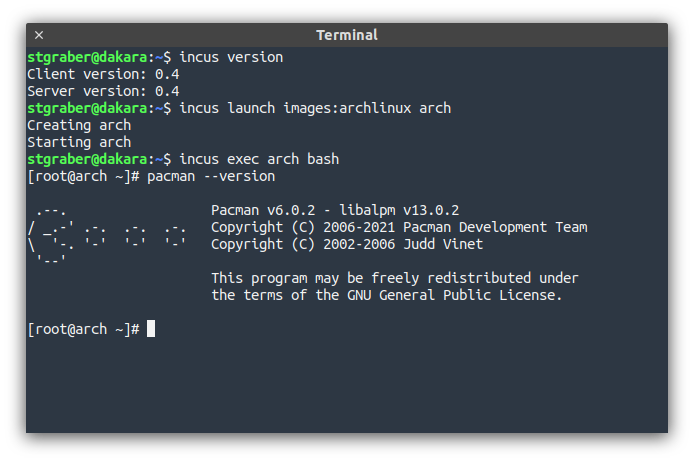

Linux Containers Release Incus 0.4

Linux Containers Release Incus 0.4

The Incus team has announced the release of Incus 0.4, the latest version of their system container and virtual machine manager. This release is particularly significant as it marks the last release of Incus to feature changes coming from LXD, as Incus has now become fully independent.

Incus 0.4 introduces several exciting new features, including a built-in keep-alive mode in the client tool, improvements to certificate/trust store management, new OVN configuration keys, and the ability to directly create CephFS filesystems. Additionally, Incus 0.4 brings significant improvements to both OpenFGA and OVN handling, setting the infrastructure in place for upcoming new features.

One of the standout features of Incus 0.4 is the new keep-alive support in the CLI client. Users can set a keepalive configuration key on a remote in ~/.config/incus/config.yml, defining how long to keep a background connection with the Incus server. This feature significantly reduces latency and provides up to a 30% performance improvement for use cases that involve a lot of incus commands, such as Ansible.

Another notable addition in Incus 0.4 is the description field for certificate entries. This brings certificate entries in line with other Incus objects and enhances the overall user experience.

The incus config trust list command has also been reworked in this release to show more useful columns by default, including the description column. These columns are now configurable, providing users with more control over their configurations.

In terms of infrastructure improvements, Incus 0.4 introduces OVN SSL keys as server configuration. This allows users to specify SSL certificates and keys to access OVN, taking precedence over any keys found in /etc/ovn/.

Additionally, CephFS filesystems can now be directly created in Incus. Users can set the cephfs.create_missing config key to true and specify the OSD pool to consume, allowing Incus to create a new CephFS filesystem.

Users of LXD are also advised that access to the community image server (images: remote) will be phased out over a period of around 5 months. It is recommended that LXD users running non-Ubuntu images start planning their migration to Incus.

For more details on this release, including the complete changelog, documentation, and available packages, please visit the Incus website.

QEMU 8.2 Introduces New VirtIO-Sound & VirtIO-GPU “Rutabaga” Devices

QEMU 8.2, the latest update for the open-source processor emulator, has been released. This release brings several new features and improvements to the open-source Linux virtualization stack.

Some of the key highlights of QEMU 8.2 include:

  • Addition of a new VirtIO-Sound device that allows capture and playback from inside a guest using the audio backend of the host machine.

  • Introduction of a new VirtIO-GPU “Rutabaga” device, which enables various abstractions of GPU and display virtualization. This feature is primarily intended for use with the Android Emulator on QEMU and comes from the Android/CrosVM graphics stack.

  • Support for UFS (Universal Flash Storage) emulation through new ufs and ufs-lu devices.

  • P2P support for VFIO migration.

  • Preparation changes for the new IOMMUFD back-end.

  • Continued active development of RISC-V software support. QEMU 8.2 now supports several new RISC-V ISA extensions, virtual IRQs and IRQ filtering, and RISC-V vector crypto v1.0.

  • Improved emulation for QEMU’s 68k Macintosh Quadra 800, allowing it to boot MacOS 7.1, A/UX 3.0.1, Linux, and NetBSD 9.3.

  • Addition of new Arm CPU types, including Cortex-A710 and Neoverse-N2. QEMU also provides support for emulating newer ARM architecture extensions.

  • QEMU on LoongArch now supports the LASX and PRELDX instructions, along with support for 4K page sizes and ongoing LoongArch enablement work.

  • HAX(M), the Hardware Accelerated Execution Manager, is no longer supported by QEMU since Intel discontinued its development earlier this year.

For more information and downloads, you can visit the QEMU 8.2 feature release page on wiki.qemu.org.

Source: Phoronix.

Rust Guest Tools 0.3.0: Enhancing Virtualization Experience

XCP-ng has released version 0.3.0 of its Rust guest agent for Linux and BSD operating systems. This release includes several new features and bug fixes.

One major change is the addition of APT repositories, allowing for easy installation and updates of the guest agent on Debian-based systems. The Debian package is automatically built on Gitlab and can be accessed via a Debian repository.

The agent now has the ability to collect available and total guest memory inside FreeBSD guests. Additionally, the command line for the agent now includes two extra arguments, --stderr and --loglevel, for troubleshooting assistance. All guest agent logs are now sent to syslog by default on any Unix-like operating system.

Bug fixes include resolving an issue with plugging and unplugging a virtual NIC while the VM is online, thanks to community testing and feedback. Another bug fix removes a requirement on the libxenstore.so development symlink, now only requiring the runtime library package.

For more details, the complete changelog can be found here.

New and Improved Installer for XCP-ng 8.2.1

The XCP-ng team has rolled out an updated installer for version 8.2.1, bringing various improvements.

The release includes all security and maintenance updates since the initial launch, enhanced hardware support, and drivers. Notable fixes involve AMD hardware boot failures, display issues on Intel NUC 10 and above, and compatibility with newer CPUs. The installer now supports network chipsets for home labs, includes additional optional drivers, and ensures a smoother installation process.

Users can download the latest ISOs from the official website.

Harvester Releases v1.3.0-dev-20231208 for Testing: Open Source HCI Platform

Harvester Releases v1.3.0-dev-20231208 for Testing: Open Source HCI Platform

Harvester, an open-source hyperconverged infrastructure (HCI) solution built on Kubernetes, has released version v1.3.0-dev-20231208 for testing. Harvester is designed for operators who are looking for a cloud-native HCI solution and runs on bare metal servers. It offers integrated virtualization and distributed storage capabilities, supporting both traditional virtual machines (VMs) and containerized environments through integration with Rancher.

This release is specifically for testing purposes and comes with a few important notes:

  • It is not fully tested, so users should proceed with caution.
  • Upgrading from previous releases or to future releases is not supported.
  • Bug reports are welcome.

Artifacts for this release include the following:

There have been several changes in this release, including bug fixes and feature updates. Notable changes include fixing the SupportBundle CRD additionalPrinterColumns path, restoring the start of VMs if they were voluntarily powered off, and updating various components such as Wharfie, KubeVirt, and Longhorn.

Overall, Harvester’s latest release provides users with an opportunity to test and explore its features and functionalities. However, it is important to remember that this release is not fully tested and should be used at one’s own risk.